Mystic Shrine Quest VR 🎮
India's Groundbreaking Virtual Reality Adventure Game
Game Overview
Mystic Shrine Quest VRrepresents a revolutionary milestone in the Indian gaming industry, blending cutting-edge virtual reality technology with rich cultural heritage. This immersive experience transports players to meticulously recreated ancient Indian temples, where they embark on spiritual journeys through beautifully rendered sacred spaces.
The game has been praised for its authentic representation of Indian architectural marvels and mythological narratives. Players assume the role of a seeker on a quest to uncover hidden mysteries within these sacred spaces, solving intricate puzzles that draw from ancient Indian philosophical concepts and mathematical principles.
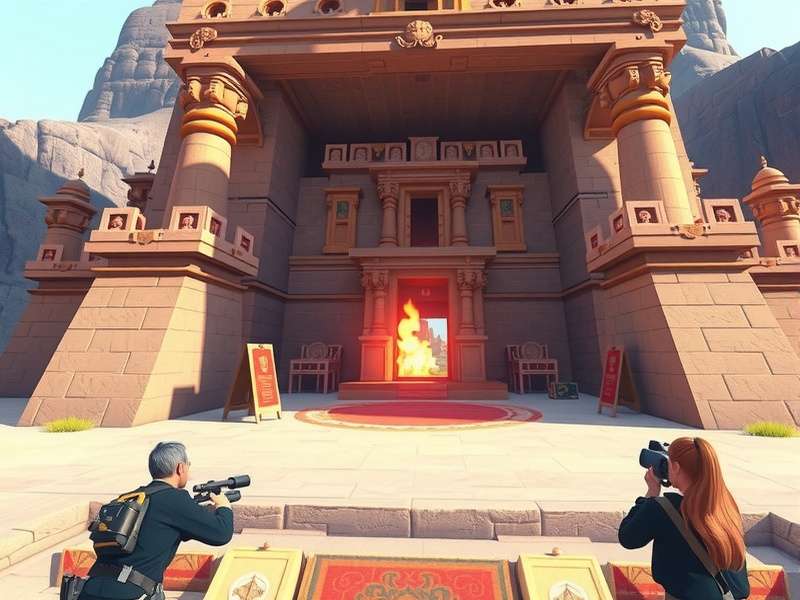
Developed by a talented team of Indian game designers, historians, and VR specialists,Mystic Shrine Quest VRstands as a testament to India's growing prowess in the global gaming market. The game has received international acclaim for its innovative approach to cultural preservation through interactive media.
Gameplay Mechanics
The core gameplay ofMystic Shrine Quest VRrevolves around exploration, puzzle-solving, and spiritual discovery. Players navigate through breathtaking temple environments using intuitive motion controls that make the VR experience feel natural and immersive.
Puzzle Systems
The game features over 50 unique puzzles based on Vedic mathematics, temple architecture principles, and mythological stories. Each puzzle is seamlessly integrated into the environment, requiring players to observe their surroundings carefully and think critically.
Exploration
Players can freely explore massive temple complexes, hidden chambers, and sacred grounds. The non-linear progression allows for personalized discovery paths, with multiple solutions to many challenges based on player preference and playstyle.
Story Integration
The narrative unfolds through discovered artifacts, ancient inscriptions, and encounters with spiritual guides. Players piece together the larger story of each shrine through environmental storytelling and collected lore.
VR Interactions
Advanced hand-tracking technology allows players to manipulate objects with precision - rotating sacred symbols, arranging ritual items, and tracing mandala patterns with natural hand movements that enhance immersion.
Game Progression
Mystic Shrine Quest VR is structured around seven major shrines, each representing different aspects of Indian spiritual tradition. Players begin their journey at the Temple of Elements and progress through increasingly complex environments including the Sanctuary of Wisdom, the Grove of Enlightenment, and the final challenge at the Celestial Peak.
Each completed shrine unlocks new abilities and insights that help players navigate subsequent challenges. The game's difficulty curve is carefully designed to accommodate both VR newcomers and experienced players, with adaptive challenge scaling based on player performance.
Development History
The development ofMystic Shrine Quest VRbegan in 2019 as a passion project by a small team of Indian developers who wanted to create a game that celebrated their cultural heritage. The project quickly gained momentum after receiving funding from the Indian Ministry of Electronics and Information Technology's gaming initiative.
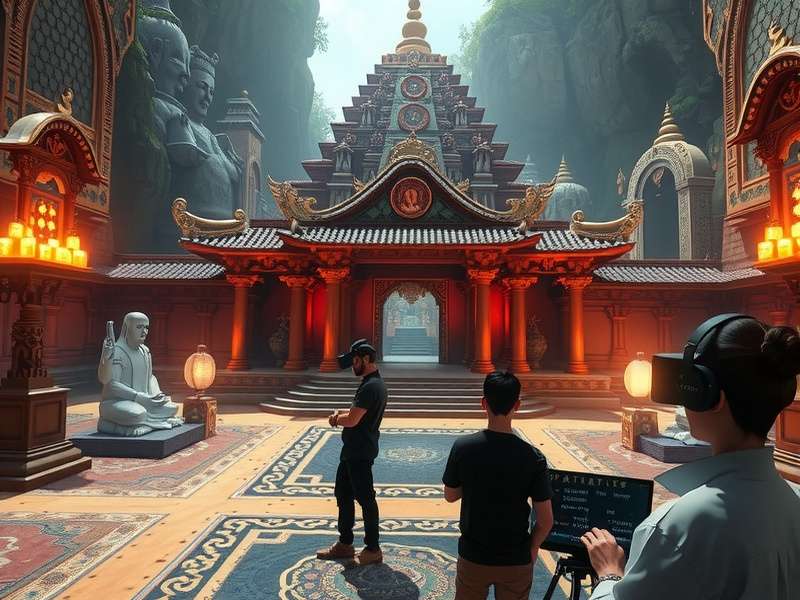
Over three years of intensive development, the team collaborated with historians, archaeologists, and cultural experts to ensure authentic representation of temple architecture and mythological elements. The developers conducted field research at numerous historical sites across India, capturing detailed photographic references and measurements.
Technical Innovation
The development team created several proprietary technologies specifically for Mystic Shrine Quest VR, including an advanced rendering system optimized for complex architectural details and a unique physics engine that accurately simulates the behavior of traditional materials like stone, wood, and ritual objects.
Special attention was paid to creating comfortable VR movement systems that minimize motion sickness while maintaining immersion. The team implemented multiple locomotion options including teleportation, smooth movement, and room-scale navigation to accommodate different player preferences.
Critical Reception
Upon its release,Mystic Shrine Quest VRreceived widespread critical acclaim, with particular praise for its cultural authenticity, visual design, and innovative puzzle mechanics. The game holds an aggregate score of 88/100 on review aggregator sites, with many reviewers highlighting it as a landmark title for cultural representation in gaming.
Awards and Recognition
The game has received numerous awards including Best VR Experience at the India Game Developer Conference, Cultural Innovation Award at the International Games Festival, and nomination for Best Independent Game at the Global VR Awards. Educational institutions have also recognized its value as a teaching tool for Indian history and architecture.
Player Community
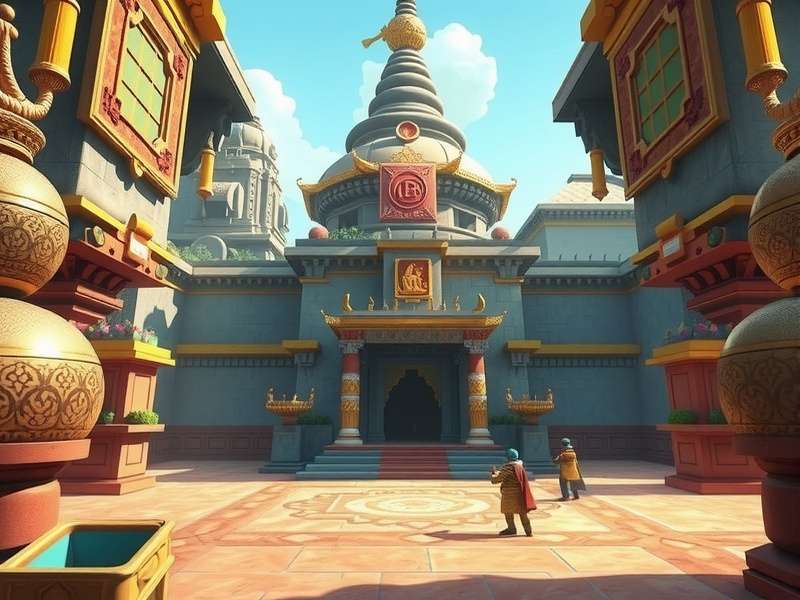
The Mystic Shrine Quest VR community has grown rapidly since launch, with players forming online groups to share puzzle solutions, exploration tips, and historical insights about the temples featured in the game. The developers maintain active engagement with the community through regular updates and cultural content expansions.
User-generated content has become a significant aspect of the game's ecosystem, with players creating guided meditation sessions within the virtual temples and educational walkthroughs explaining the historical significance of various game elements. This community engagement has extended the game's lifespan far beyond typical VR titles.
Technical Specifications
Mystic Shrine Quest VR was built using the Unity engine with extensive custom modifications to handle the unique requirements of Indian architectural visualization. The game supports all major VR platforms including Oculus Rift, HTC Vive, Valve Index, and PlayStation VR, with plans for standalone VR headset support in future updates.
Graphics and Performance
The game features a custom rendering pipeline optimized for the intricate details of temple architecture, with special shaders that accurately reproduce the appearance of aged stone, polished wood, and metallic ritual objects. Dynamic lighting systems simulate the play of light through traditional jali screens and create atmospheric temple interiors.
Performance optimization was a key focus during development, with the team implementing advanced level streaming techniques that allow for massive, seamless temple environments without loading screens. The game maintains a consistent 90fps on recommended hardware, ensuring comfortable VR immersion even during complex visual sequences.
Accessibility Features
The developers have implemented comprehensive accessibility options including multiple comfort settings for VR newcomers, colorblind modes, adjustable puzzle difficulty, and alternative control schemes for players with limited mobility. These features have been widely praised for making the game accessible to a broader audience.
Looking forward, the development team has announced plans for educational and museum editions of Mystic Shrine Quest VR, with additional historical context and guided tour modes. These specialized versions aim to make Indian cultural heritage accessible to students and cultural enthusiasts worldwide.
Cultural Impact
Beyond its success as an entertainment product, Mystic Shrine Quest VR has had significant cultural impact, sparking renewed interest in Indian temple architecture and mythology among younger generations. Educational institutions have begun incorporating the game into history and architecture curricula, using its detailed virtual environments as teaching tools.
The game has also influenced the broader gaming industry, demonstrating the commercial viability of culturally specific content in the global market. Several international developers have cited Mystic Shrine Quest VR as inspiration for their own culturally grounded projects, contributing to greater diversity in game themes and settings.
Perhaps most importantly, Mystic Shrine Quest VR has become a source of pride for the Indian gaming community, proving that world-class game development can emerge from the country while celebrating its unique cultural heritage. The success of this title has inspired a new generation of Indian developers to explore their own cultural stories through interactive media.
Future Developments
The ongoing success of Mystic Shrine Quest VR has paved the way for several exciting future developments. The creators have announced expansion packs featuring temples from different regions of India, each with unique architectural styles and mythological themes. These expansions will further enrich the game's cultural representation and gameplay variety.
Technological advancements are also on the horizon, with the development team exploring augmented reality integrations that would allow players to place virtual temple elements in their physical environment. Research is underway for haptic feedback systems that could simulate the texture of ancient stone and other materials, deepening the immersive experience.
Educational partnerships with museums and cultural institutions are expanding the game's reach beyond entertainment. Specialized versions of Mystic Shrine Quest VR are being developed for classroom use, with curated content aligned with educational standards and additional historical context for each temple environment.
The lasting legacy of Mystic Shrine Quest VR may ultimately be its demonstration that cultural preservation and cutting-edge technology can work in harmony. As virtual reality continues to evolve, this groundbreaking game stands as a model for how digital experiences can celebrate, preserve, and share cultural heritage with global audiences.